What Is a 401(k)? A Simple Guide to Your Employer Retirement Plan
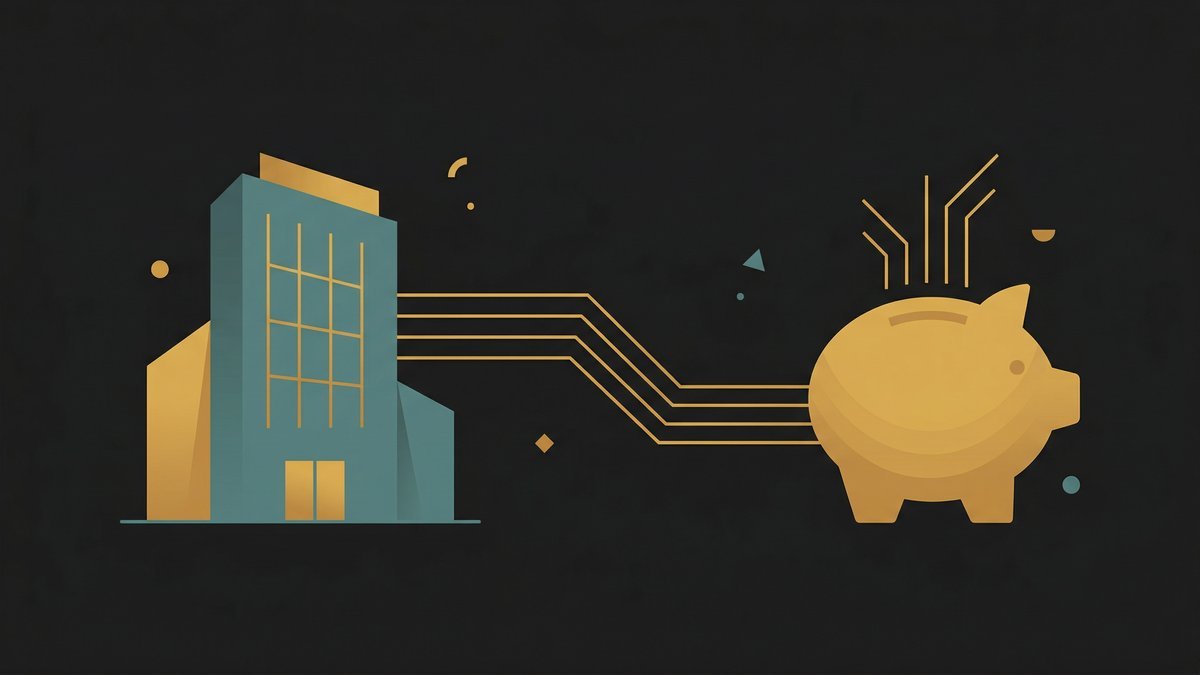
What is a 401k? A 401(k) — also written as 401k — is a retirement savings account offered by your employer that lets you invest a portion of your paycheck before taxes are taken out. The money grows tax-deferred — meaning you don’t pay taxes on the gains until you withdraw them in retirement. And if your employer offers a matching contribution, they’ll add free money on top of what you put in.
Despite being one of the most powerful wealth-building tools available to working Americans, a staggering number of employees either don’t participate in their 401(k) at all or contribute far less than they should. According to the Bureau of Labor Statistics, only about 73% of workers with access to a 401(k) actually participate — meaning roughly one in four eligible employees leaves this benefit unused entirely.
If you’ve been enrolled at the default 3% contribution because you never changed it, if you haven’t enrolled at all, or if you genuinely don’t understand what a 401(k) is or how it works — this guide covers everything you need to know about what is a 401k in plain English.
What Is a 401k and How Does It Work?
A 401(k) is a tax-advantaged retirement account sponsored by your employer. It’s named after Section 401(k) of the Internal Revenue Code — not the most inspiring name, but the benefits are significant. Here’s how it works step by step:
- You choose a contribution percentage. You tell your employer to withhold a certain percentage of your gross pay — say, 6% — and direct it into your 401(k) account. This happens automatically from every paycheck.
- The money is invested pre-tax. With a traditional 401(k), your contributions are deducted from your paycheck before federal income taxes are calculated. If you earn $5,000/month and contribute 6% ($300), you’re only taxed on $4,700. This reduces your current tax bill immediately.
- You choose investments. Your 401(k) plan offers a menu of investment options — typically a selection of mutual funds, index funds, target-date funds, and sometimes company stock. You decide how to allocate your contributions across these options.
- Your investments grow tax-deferred. All dividends, interest, and capital gains inside the account grow without being taxed annually. This allows compound interest to work at full speed without the drag of yearly tax deductions.
- You pay taxes when you withdraw in retirement. After age 59½, you can begin withdrawing money. At that point, withdrawals are taxed as ordinary income. The idea is that your tax rate in retirement may be lower than during your peak earning years.
The Employer Match: Free Money You Can’t Afford to Skip
This is the single most important reason to understand what a 401(k) is: the employer match. Many employers will match a portion of your contributions — and that match is essentially free money added to your retirement account.
Common match structures include:
- 50% match on the first 6%: For every dollar you contribute (up to 6% of salary), your employer adds 50 cents. On a $60,000 salary, that’s $1,800/year in free money.
- 100% match on the first 3%: Dollar-for-dollar match up to 3% of salary. On $60,000, that’s $1,800/year.
- 100% match on the first 4%: Dollar-for-dollar up to 4%. On $60,000, that’s $2,400/year.
Not capturing the full employer match is one of the most costly money mistakes you can make. If your employer offers a 50% match on 6% and you’re only contributing 3%, you’re forfeiting half the free money available to you — hundreds or thousands of dollars per year that would have compounded for decades.
Here’s how the match compounds over time on a $60,000 salary with a 50% match on 6%:
- Your contribution (6%): $3,600/year
- Employer match (50%): $1,800/year
- Total annual investment: $5,400
- After 10 years at 10% return: ~$93,700
- After 20 years: ~$340,000
- After 30 years: ~$975,000
Nearly a million dollars — and $325,000 of it came from your employer’s match contributions and the compound growth on those contributions. That’s wealth generated by money someone else gave you, compounded over time.
2026 Contribution Limits
The IRS sets annual limits on how much you can contribute to a 401(k). For 2026, per IRS guidelines:
- Employee contribution limit (under 50): $23,500
- Catch-up contribution (age 50+): Additional $7,500, for a total of $31,000
- Super catch-up (ages 60–63): Additional $11,250, for a total of $34,750
- Combined employee + employer limit: $70,000 (under 50)
Most beginners won’t max out at $23,500 right away — and that’s fine. The priority is contributing at least enough to capture your full employer match. After that, increasing your contribution by 1% per year (especially when you get raises) is a reliable way to gradually approach the max without a sudden hit to your take-home pay.
Traditional 401(k) vs. Roth 401(k)
Many employers now offer both a traditional and a Roth 401(k) option. The difference mirrors the Roth IRA vs. traditional IRA distinction:
- Traditional 401(k): Contributions are pre-tax (reduces your taxable income now). Withdrawals in retirement are taxed as ordinary income.
- Roth 401(k): Contributions are after-tax (no upfront tax break). Withdrawals in retirement are completely tax-free — including all the growth.
Which should you choose? The general rule: if you expect to be in a higher tax bracket in retirement than you are now (common for people in their 20s and 30s whose earnings will grow), the Roth 401(k) is likely better — you pay taxes at today’s lower rate and withdraw tax-free later. If you’re in your peak earning years and expect a lower rate in retirement, the traditional 401(k) saves you more in taxes today.
If you’re unsure, splitting contributions between both (if your plan allows it) gives you tax diversification in retirement — the flexibility to pull from taxable and tax-free accounts depending on your situation.
How to Choose Investments Inside Your 401(k)
Your 401(k) isn’t an investment itself — it’s an account that holds investments. The actual growth depends on what you invest in within the plan. Most 401(k) plans offer 15–30 fund options. Here’s how to navigate them:
Option 1: Target-Date Fund (Simplest)
A target-date fund automatically adjusts its allocation based on when you plan to retire. If you’re 30 and plan to retire around 2060, you’d select a “Target 2060” fund. It starts aggressive (more stocks) and gradually shifts conservative (more bonds) as you approach retirement. One fund, fully managed, no decisions required.
This is the best option for anyone who doesn’t want to actively manage their 401(k) allocations — and there’s no shame in that. Target-date funds are used by millions of investors and are specifically designed for this purpose.
Option 2: Index Funds (Low-Cost, DIY)
If your plan offers a broad-market index fund — such as an S&P 500 fund or total stock market fund — this is typically the lowest-cost option. Look for funds with expense ratios below 0.10%. Pair a U.S. stock index fund with an international fund and possibly a bond fund if you want more conservative allocation.
What to Avoid
- High-fee actively managed funds. Any fund with an expense ratio above 0.50% deserves scrutiny. Over 30 years, a 0.75% fee costs tens of thousands more than a 0.05% index fund — and most active funds underperform their index anyway.
- Company stock. Some plans allow you to invest in your employer’s stock. This concentrates your risk — your income and your investments both depend on the same company. Diversify instead.
- Stable value or money market funds (for long-term investing). These are safe but produce minimal returns. Appropriate for near-retirees, not for someone with 20–30 years of growth ahead.
A Real-World Example: What Ignoring Your 401(k) Actually Costs
Megan and Sarah both start working at the same company at age 25, earning $55,000. The company offers a 50% match on the first 6% of salary.
Megan enrolls immediately at 6%, captures the full match, and invests in a low-cost S&P 500 index fund. She never changes her contribution percentage but gets modest raises averaging 2% per year.
Sarah skips enrollment entirely for her first five years. At 30, she enrolls at the default 3% — capturing only half the match — and invests in a high-fee actively managed fund charging 0.80%. She never adjusts.
By age 60, assuming 10% gross market return:
- Megan’s 401(k): ~$1,420,000. She contributed ~$150,000 of her own money over 35 years.
- Sarah’s 401(k): ~$380,000. She contributed ~$63,000 over 30 years.
The gap: over $1,000,000. Sarah didn’t make one catastrophic decision. She just delayed five years, contributed half as much, skipped half the match, and paid higher fees. Four quiet choices that compounded into a million-dollar difference.
This is why understanding what is a 401k — and acting on it early — matters more than almost any other financial decision you’ll make in your 20s.
What Happens to Your 401(k) When You Leave a Job?
Your 401(k) is yours — it doesn’t disappear when you change employers. You have four options:
- Leave it in the old plan. If the plan has good fund options and low fees, you can keep it where it is. The money continues to grow.
- Roll it into your new employer’s 401(k). Consolidates your retirement savings in one place. Check that the new plan has decent investment options first.
- Roll it into a traditional IRA at a brokerage. This is often the best option — IRAs at Fidelity, Schwab, or Vanguard typically offer a wider range of low-cost index funds than most employer 401(k) plans. A direct rollover avoids taxes and penalties.
- Cash it out (worst option). You’ll pay income tax plus a 10% early withdrawal penalty if you’re under 59½. On a $50,000 balance, you could lose $15,000–$20,000 to taxes and penalties. Avoid this unless you have absolutely no other option.
The 401(k) Action Plan for Beginners
If you’re employed and have access to a 401(k), here’s the exact sequence of actions, in order of priority:
- Enroll (or verify enrollment). Log into your employer’s benefits portal. Confirm you’re contributing. If you haven’t enrolled, do it today — most plans allow changes at any time, not just during open enrollment.
- Set your contribution to at least the employer match threshold. If the match is 50% on the first 6%, contribute 6%. This is the minimum. Anything less means you’re declining free compensation.
- Choose a low-cost investment. Select a target-date fund matching your approximate retirement year, or a broad-market index fund with an expense ratio below 0.10%.
- Increase by 1% per year. Every time you get a raise, increase your 401(k) contribution by 1%. You’ll barely notice the difference in your paycheck, but over a career, it’s transformative. Many plans offer an “auto-escalation” feature that does this automatically.
- Once the match is captured, max out your Roth IRA before adding more to the 401(k) — the Roth’s tax-free withdrawals are typically more valuable than additional pre-tax 401(k) contributions, especially for younger earners.
The entire setup takes about 20 minutes. The automation is built in — contributions are deducted from your paycheck before it hits your bank account. You never see the money, so you never miss it. It’s the original “pay yourself first” system, and your employer designed it to run on autopilot.
Frequently Asked Questions
What is a 401k in simple terms?
A 401k is a retirement savings account offered through your employer. A portion of your paycheck goes directly into the account before taxes are deducted. You choose how to invest the money (typically in mutual funds or index funds), and it grows tax-deferred until you withdraw it in retirement. Many employers also contribute additional “matching” funds based on how much you put in.
How much should I contribute to my 401(k)?
At minimum, contribute enough to capture your full employer match — this is free money and the highest guaranteed return available to you. Beyond the match, aim for 10–15% of gross income if possible. If that’s not feasible right now, start at the match level and increase by 1% per year. The 2026 maximum employee contribution is $23,500 (under age 50).
Can I withdraw from my 401(k) before retirement?
Technically yes, but it’s expensive. Withdrawals before age 59½ typically incur a 10% early withdrawal penalty plus regular income taxes. On a $20,000 withdrawal, you could lose $6,000–$8,000 to penalties and taxes. Exceptions exist for certain hardships and specific conditions under the SECURE Act. In general, a 401(k) should be treated as untouchable until retirement — use your emergency fund for unexpected expenses instead.
The Bottom Line
Now you know what is a 401k: a tax-advantaged, employer-sponsored retirement account that automates wealth-building directly from your paycheck. It reduces your current taxes, grows your investments tax-deferred, and — with an employer match — gives you free money that compounds for decades.
The budgeting system, the emergency fund, the Roth IRA, and the 401(k) all work together. The 401(k) captures the employer match and reduces your tax bill. The Roth IRA provides tax-free growth. The budget creates the margin that makes both possible. And automation ensures all three run without your daily involvement.
Enroll today. Contribute at least to the match. Choose a low-cost index fund or target-date fund. Increase by 1% per year. That’s the system — and it’s been quietly creating millionaires for decades.
This article is for educational and informational purposes only. It does not constitute personalized financial, tax, or investment advice. Consult a qualified financial professional before making retirement plan decisions.
Want the complete beginner roadmap? The Money Mechanics Playbook covers all the fundamentals – from your first budget to your first investment. Get the free playbook here!