Side Hustle to Savings: How to Turn Extra Income into Real Wealth
Turning your side hustle to savings is the difference between extra income that disappears and extra income that builds real wealth. According to a 2025 Bankrate survey, 36% of American adults have a side hustle — and the average side hustler earns roughly $891 per month. That’s over $10,000 per year of additional income. The question is: where does it go?
For most people, the answer is “everywhere.” It gets absorbed into daily spending, used to cover bills that their primary income should handle, or spent on lifestyle upgrades the moment it hits their bank account. The side hustle generates income, but it doesn’t generate wealth — because there’s no system directing it.
This article lays out the exact framework for converting your side hustle to savings and long-term investments. Whether you’re freelancing, driving for a rideshare, selling products online, or tutoring on weekends — the strategy is the same. Build a pipeline that automatically routes your extra income into the financial system that compounds it over decades.
Why Most Side Hustles Don’t Build Wealth
A side hustle, by itself, is just extra labor. It generates additional income — but income without a system is a leaky bucket. If every dollar of side income flows into the same checking account as your primary paycheck and gets spent the same way, you’ve worked more hours for the same financial position.
The fundamental problem: side hustle income feels like bonus money. And bonus money gets treated differently than regular income. Psychologists call this “mental accounting” — we’re more likely to spend windfall income on discretionary purchases because it doesn’t feel like it’s part of our “real” budget. A CNBC analysis found that nearly half of side hustlers use the income to cover regular living expenses, and another significant portion spends it on wants.
There’s nothing wrong with using side income to cover bills if your primary income doesn’t stretch far enough. But if your day job covers your essentials and you’re earning $500–$1,000/month on the side, you have a rare and powerful opportunity: an entirely separate income stream that can be redirected straight into your side hustle to savings pipeline without changing your daily spending at all.
The Side Hustle to Savings Framework
Here’s the system. It works regardless of the type of side hustle, the amount you earn, or how irregular the income is.
Step 1: Separate the Money Immediately
The moment side hustle income hits your bank account, it should be routed somewhere other than your primary checking account. This is the most critical step — and it’s where most people fail.
Open a dedicated high-yield savings account specifically for side income. Every dollar you earn from your side hustle gets transferred here — automatically if the platform allows direct deposit, or manually within 24 hours if not. The point is separation. Once the money is in your regular checking account, it’s psychologically indistinguishable from your paycheck — and it’ll be spent like your paycheck.
Step 2: Set Your Tax Aside First
Side hustle income is typically untaxed at the source — no employer is withholding federal, state, or self-employment taxes. If you don’t set money aside for taxes proactively, you’ll owe a painful lump sum in April.
The rule of thumb: set aside 25–30% of every side hustle dollar for taxes. If you earn $800 from freelancing, $200–$240 goes into a separate tax savings bucket before you allocate the rest. Some people keep a dedicated “tax” sub-account within their HYSA; others transfer it to a second savings account labeled “Taxes.”
This isn’t optional. Self-employment tax alone is 15.3% (Social Security + Medicare), and federal income tax adds another 10–22% depending on your bracket. Setting aside 25–30% covers most scenarios with a small buffer.
Step 3: Direct the Remainder Using a Priority System
After taxes are set aside, the remaining 70–75% of your side income should flow through a priority system — the same framework that applies to all financial decisions. The order depends on where you are in your financial journey:
- If you don’t have a $1,000 emergency fund: 100% of after-tax side income goes to building the emergency fund until you hit $1,000. This is the foundation.
- If you have high-interest debt (above 7–8%): Direct side income toward aggressive debt payoff. Side income is the perfect accelerator here because it doesn’t disrupt your regular budget. A $600/month side hustle devoted entirely to a $5,000 credit card balance eliminates it in about 9 months.
- If the emergency fund and high-interest debt are handled: Invest. This is where the side hustle to savings pipeline becomes a side hustle to wealth pipeline. Route the money into a Roth IRA or taxable brokerage account invested in broad-market index funds.
The beauty of using side hustle income this way: your regular paycheck continues to cover your daily life. Your side income covers your financial future. The two streams serve different purposes, and neither disrupts the other.
Step 4: Automate What You Can
If your side hustle generates predictable monthly income (even roughly), set up an automatic monthly transfer from your side hustle savings account to your investment account. Schedule it for a specific day each month. Use dollar-cost averaging to invest the money automatically into your chosen index fund.
If the income is irregular (freelance projects, seasonal gigs), batch-transfer at the end of each month: calculate what came in, subtract 25–30% for taxes, and move the rest to your investment or debt payoff account in one transfer.
Either way, the money should never sit idle in a checking account waiting for you to decide what to do with it. Decision fatigue is the enemy. Systems remove the decision.
The Math: What Side Hustle Income Becomes Over 20 Years
Here’s where the side hustle to savings concept gets genuinely exciting. These projections assume you invest your after-tax side income in a broad-market index fund at a 10% average annual return:
- $300/month invested for 20 years: ~$206,000
- $500/month invested for 20 years: ~$344,000
- $700/month invested for 20 years: ~$481,000
- $1,000/month invested for 20 years: ~$687,000
At $500/month — which represents the after-tax portion of a ~$700/month side hustle — you’re looking at $344,000 in 20 years. Your total contributions would be $120,000. Compound interest generates the other $224,000. And if you’re investing in a Roth IRA, every dollar of that growth is withdrawn tax-free in retirement.
These aren’t life-changing side hustles. These are modest, sustainable efforts — a few hours of freelancing per week, a weekend tutoring gig, or an e-commerce shop that generates a few hundred dollars per month. The wealth isn’t built by the hustle itself. It’s built by what you do with the money the hustle generates.
A Real-World Example: From Dog Walking to $180,000
Kenji is 30, works full-time as an IT support specialist earning $56,000, and walks dogs on weekday mornings and Saturday afternoons through a local pet-sitting app. The side hustle takes about 10 hours per week and nets him roughly $650/month.
Here’s how Kenji runs his side hustle to savings system:
- Income: $650/month deposited into a dedicated HYSA
- Taxes (30%): $195/month transferred to a “Taxes” sub-account
- Available for investing: $455/month
- Investment: $455/month auto-invested into VTI in his Roth IRA via dollar-cost averaging
Kenji’s primary salary covers all his living expenses. His budget works without the side income. The dog-walking money is entirely surplus — and 100% of the after-tax portion goes directly into investments.
At $455/month invested at 10% average annual return:
- After 5 years: ~$35,200
- After 10 years: ~$93,500
- After 15 years: ~$190,000
In 15 years, Kenji’s dog-walking side hustle has produced roughly $190,000 in his Roth IRA — completely tax-free in retirement. His total side hustle earnings over that period: about $117,000. Compound interest more than doubles his money because he channeled it into a system rather than spending it.
Kenji didn’t build a six-figure business. He walked dogs, set up a pipeline, and let the system run for 15 years. That’s the side hustle to savings strategy in practice.
Common Mistakes When Using Side Hustle Income
- Treating it as spending money. If your side hustle income goes into the same checking account as your paycheck and gets spent the same way, you’ve added work to your life without adding wealth. Separate the accounts.
- Forgetting about taxes. A $12,000/year side hustle can generate a $3,000+ tax bill if you haven’t set money aside. Getting hit with an unexpected April bill defeats the entire purpose. Always reserve 25–30% upfront.
- Waiting to “save up enough” before investing. You don’t need to accumulate a lump sum. Invest monthly as the income comes in. Even $200/month invested immediately via dollar-cost averaging outperforms saving $2,400 and investing it at year-end — because the money starts compounding sooner.
- Lifestyle-inflating with every pay increase. Side hustle income often grows over time as you build skills, reputation, or client bases. The temptation is to upgrade your lifestyle with the growth. Apply the same rule as your primary income: save at least 50% of any side income increase before spending more. (More on avoiding this trap here.)
- Not tracking net income. A side hustle that grosses $800/month but costs $300 in supplies, gas, and app fees actually produces $500. Track your expenses. Your investable surplus is net income minus taxes — not gross revenue.
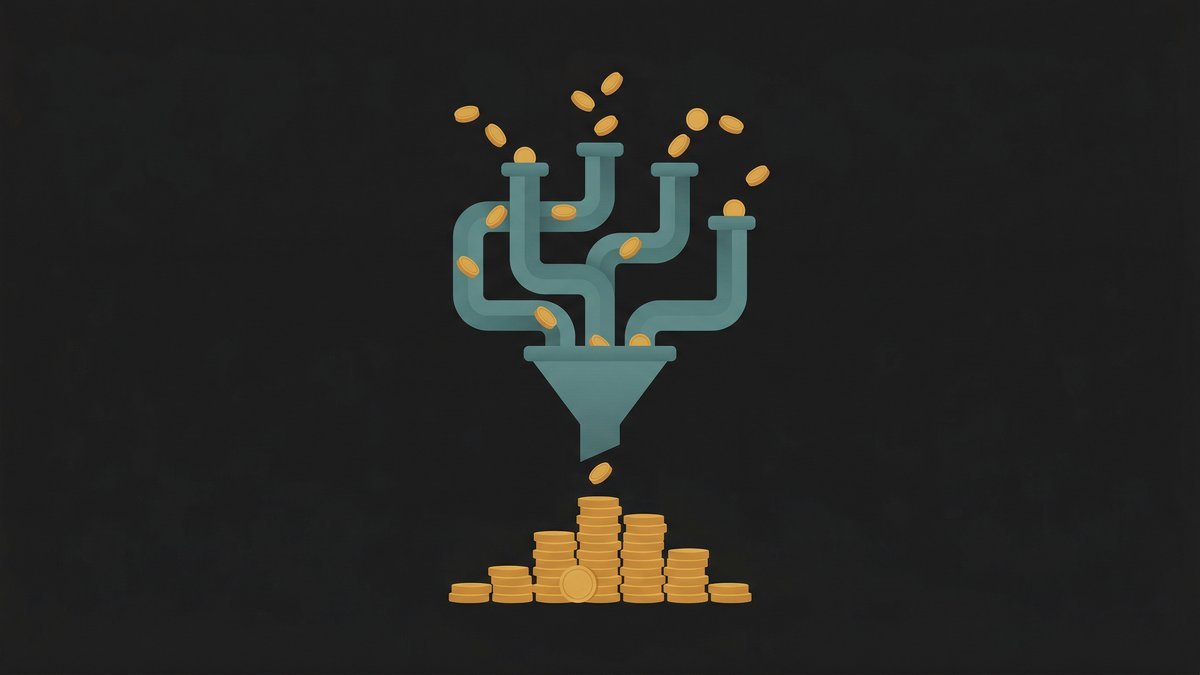
The Side Hustle to Savings Pipeline (Visual Summary)
Here’s the entire system in one flow:
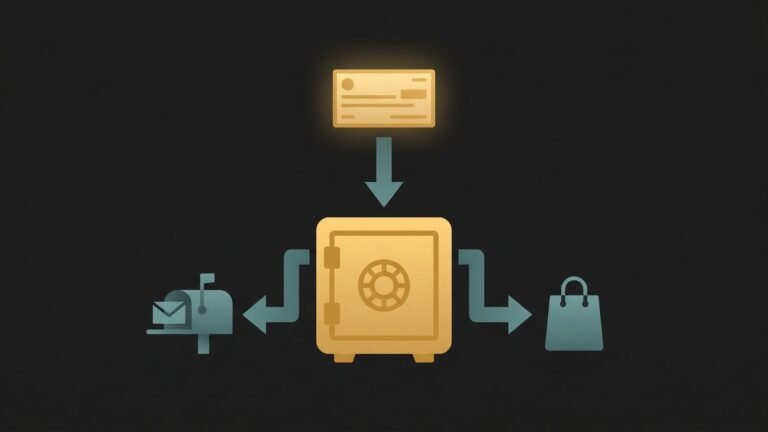
- Side hustle pays you → money deposits into dedicated HYSA (not your primary checking)
- Tax reserve (25–30%) → automatically separated into a tax sub-account or second savings account
- Remaining 70–75% → flows to the current priority:
- Priority A: Emergency fund (until $1,000–$2,000)
- Priority B: High-interest debt payoff
- Priority C: Roth IRA or brokerage → invested in index fund ETFs
- Compound interest takes over → grows your invested side income exponentially over time
The pipeline works whether your side hustle earns $200/month or $2,000/month. The mechanics don’t change — only the scale does.
Frequently Asked Questions
How much of my side hustle income should I save?
After setting aside 25–30% for taxes, aim to save and invest 100% of the remainder — at least until your emergency fund, high-interest debt, and core investment contributions are handled. If your primary income already covers your living expenses, your side hustle income should be treated entirely as surplus directed toward financial goals, not lifestyle spending.
Do I need to pay taxes on side hustle income?
Yes. Side hustle income is taxable. If you earn more than $400 in net self-employment income per year, you’re required to file a Schedule SE and pay self-employment tax (15.3%) in addition to federal and state income tax. Set aside 25–30% of gross side income for taxes, and consider making quarterly estimated tax payments to the IRS to avoid penalties.
Should I invest side hustle money or pay off debt?
Follow the interest rate rule. If you have debt above 7–8% interest (credit cards, high-rate personal loans), direct side income toward eliminating it first — it’s a guaranteed return equal to the interest rate. If your remaining debt is below 5–6% (most student loans, car loans), investing in index funds is likely to produce higher returns over time. For debt in the 5–8% range, splitting between payoff and investing is a reasonable approach.
The Bottom Line
A side hustle doesn’t build wealth. A side hustle to savings pipeline does. The difference is entirely structural — whether the extra income flows into a system that compounds it, or evaporates into the same spending patterns as your primary paycheck.
Separate the money. Set aside taxes. Direct the rest into investments. Automate whatever you can. The side hustle provides the raw material. The wealth-building system does the rest.
$500/month channeled into index funds for 20 years becomes $344,000. The hustle earns it. The system multiplies it. Time compounds it. That’s the entire strategy — and it starts the next time your side income hits your bank account.
This article is for educational and informational purposes only. It does not constitute personalized financial, tax, or investment advice. Consult a qualified tax professional regarding self-employment tax obligations and a financial advisor before making investment decisions.
Ready to build your financial system? The free Wealth Starter Kit covers all 7 fundamentals — from budgeting to automation to your first investment. Get the free playbook here.